Authors Columns of the Day Sport Guest Life All Authors
Paper tiger
The ‘paper tiger’ metaphor became a political concept when Mao Zedong, the leader of the Chinese Revolution, applied it to the imperialist United States, and it spread from China to the rest of the world.
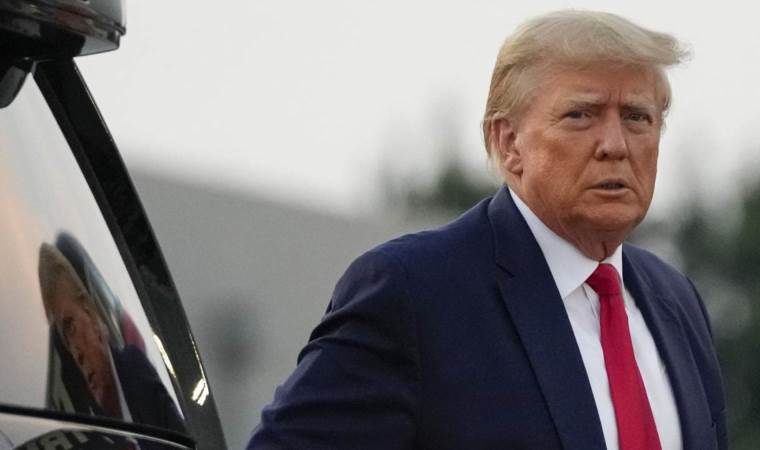
The concept was used this time by US President Donald Trump – whom Mao had called a ‘paper tiger’ – in reference to NATO, stating that ‘without the US, NATO is a paper tiger’.
Thus, seven years apart, NATO has been defined by its “weakness” by two of its nuclear-armed members: French President Emmanuel Macron had said in 2019 that “NATO’s brain death has occurred”, whilst in 2026 US President Donald Trump stated that “without the US, NATO is a paper tiger”.
NATO is weak because the US is weak
The point is that Trump’s emphasis on “without the US” does not imply that NATO is a paper tiger only if the US is present.
NATO is still, and essentially, the US, and NATO’s transformation into a paper tiger is the result of the US’s own transformation into a paper tiger. In other words, NATO is not a paper tiger “without the US”, but because the US has weakened.
Consequently, Mao has once again been proven right: the imperialist US is a paper tiger.
If the US were strong, it would not be left alone
NATO has weakened because the US has weakened. Because the US has weakened, NATO members remain silent in the face of the US’s calls for help. If the US were strong, these countries would be competing with one another to be “right by its side”.
For example, when the US was at the height of its power and attacked Afghanistan and Iraq, it was able to form a broad coalition. Today, however, it finds itself alone with Israel against Iran. To secure allies, it is resorting to diplomacy on the one hand and provocation on the other!
It is a law of gravity: you gather as many allies as your power allows. If you have power, for instance, the government in Ankara would want to join the war, declaring, as it did in Iraq, “we’ll put one in and get three out.” But if your power has waned, the government in Ankara opts for “controlled balance” in Iran. (If it becomes apparent that the US is beginning to bite into Iran, most of the allies who remain silent today will line up saying ‘we are on the US’s side’—that is, of course, a separate matter.)
The End of American Hegemony
Nicholas Mulder wrote in the British Financial Times on 17 March 2026 under the headline: “The era of US dominance in the economic war has come to an end.”
This is now the subject of discussion and debate across the Atlantic. The fact that US hegemony is weakening, that it is no longer a ‘superpower’, that it cannot maintain the order it established, and that it even disregards the rules of that order for its own interests—and that the order is therefore collapsing—is now a reality acknowledged by the US’s allies and articulated at Davos and Munich.
I examined this in detail in my book The End of American Hegemony, published by Kırmızı Kedi Publishing in 2019. I demonstrated with data that US hegemony is weakening and analysed the relationship between this and the construction of a multipolar/multicentric world. The ‘end’ of US hegemony, of course, lies within a process of ‘long decline’.
If the US cannot find a way out—and it attacked Iran precisely because of this lack of a way out—its move will go down in history as an accelerator of this process.
Covert Pro-Americanism
Another reflection of the US’s weakening is the state of the pro-Americans. They attempt to explain their inability to influence public opinion by claiming, “There are so many pro-Iranians in Turkey.”
What they seek to smear as “pro-Iranian” is, in fact, the opposition of millions in Turkey to the US-Israeli attack. Today, by opposing the imperialist-Zionist alliance’s attack on its neighbour, these millions are not only standing on the side of the just and the oppressed, but are also defending Turkey by objecting to the US’s “new Middle Eastern order under Israeli hegemony”.
Those who cannot openly declare, “I am pro-American, I am pro-Atlantic,” are engaging in covert pro-Americanism and pro-Zionism by labelling the stance of these millions as “pro-Iranian.”
Yazarın Son Yazıları All Columns
Günün Köşe Yazıları
Most Read News
-
 China's Xi to pay state visit to US this week, with
-
Zelenskyy says overnight Russian strikes killed 1
-
EU rejects Russian elections in ‘occupied’ Ukraine
-
Kremlin says no progress made in Ukraine negotiations
-
Israeli forces detain 53 Palestinians in occupied West
-
Israeli airstrikes, artillery fire hit several areas in
-
Specialist rape courts to be rolled out across UK to
-
Trump says planned 250-foot arch to serve as military