Authors Columns of the Day Sport Guest Life All Authors

Pirate Trump
Iran has proposed a 14-point plan to the US via Pakistan: four points concern guarantees that the war will end and not be renewed; four points concern the lifting of the blockade and the opening of the Strait of Hormuz; three points concern the lifting of sanctions; and three points concern nuclear negotiations.
In summary, the Tehran administration has presented Washington with a three-stage plan: in the first stage, it seeks a guarantee that the war will end and not be renewed. In the second stage, it seeks the lifting of sanctions in exchange for opening the Strait of Hormuz. Following this, in the third stage, it seeks to move on to nuclear negotiations.
The US, on the other hand, insists on the nuclear agreement as a precondition. (It is worth noting that a far better nuclear agreement than the one the US is currently seeking and would accept was signed between the US and Iran during the Obama era, but Trump withdrew from that agreement in 2018.)
The Strait of Hormuz is more important than nuclear weapons
In addition to this 14-point plan, Iran has also prepared a 12-point plan for the Strait of Hormuz. According to a statement by Ali Nikzad, Deputy Speaker of the Iranian Parliament, the passage of vessels is planned as follows:
- Israeli ships will not be permitted to pass through the Strait of Hormuz.
- Ships engaging in hostile actions against Iran will be permitted to pass through the Strait of Hormuz in exchange for payment of war reparations.
- Other ships will also be able to use the Strait of Hormuz in accordance with legislation to be enacted by the Iranian Parliament and Tehran’s permissions and regulations.
According to Iranian officials, the Strait of Hormuz is of critical importance to Iran: According to Ali Nikzad, Deputy Speaker of the Iranian Parliament, “Ship traffic in the Strait of Hormuz will not be the same as it was before the war” and “the management of the Strait of Hormuz is as important as the nationalisation of oil.” According to Mohammad Reza Rezaei, Chairman of the Iranian Parliament’s Public Works Committee, “Managing the Strait of Hormuz is more important than acquiring nuclear weapons.”
Blockade and piracy
The importance of the Strait of Hormuz is clear. From the moment Tehran closed the Strait of Hormuz to US-Israeli-linked vessels, a nightmare began for the Washington administration. The “solution” they could find in response was “blockade within a blockade”. In other words, the US placed Iran’s blockade under a subsequent outer blockade.
How effective this has been is also debatable. For despite the US blockade, ships from many countries, led by China, have been entering and exiting the strait, and continue to do so.
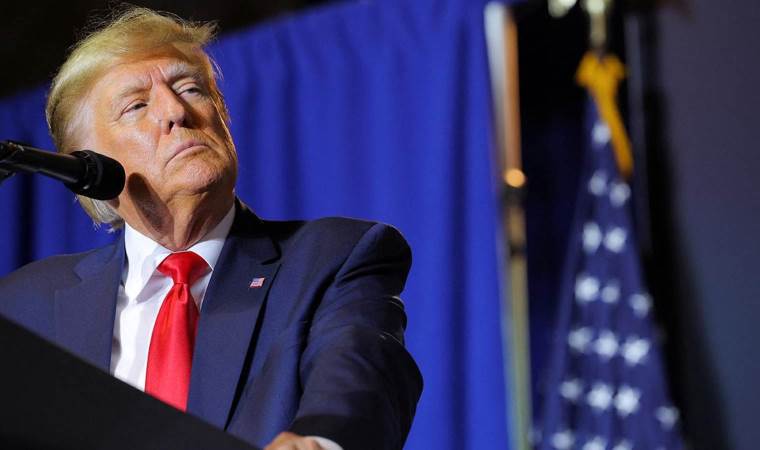
The US is attempting to demonstrate deterrence by conducting operations against certain tankers during this process. US President Donald Trump, however, boasts about these operations, saying, “We’re seizing oil. It’s a very profitable business. We’re like pirates.”
Trump’s words clearly amount to an admission of the crimes the US has committed against international maritime activities. The Tehran administration has therefore called on the UN Secretary-General and member states to take action against this piracy.
American piracy
Trump’s remarks have added yet another crime to the US’s record.
Although the US has been engaging in piracy at sea for many years, in recent times piracy has become its primary activity. Let us recall: it seized Venezuelan oil tankers and towed them to its own port; it seized a Venezuelan aircraft in a third country; together with the UK, it seized Venezuela’s gold and foreign exchange reserves; it attacked Venezuelan vessels; and it abducted Venezuelan President Maduro from his home and took him to New York.
The US has carried out similar operations to seize ships, aircraft, gold and money against other countries, Iran foremost among them. (The US administration’s seizure of fighter jets for which Turkey had paid, and its refusal to return the money, is also a form of piracy.)
The fate of pirates is clear
In short, for the US, piracy, theft, banditry and lawlessness are now the norm.
With this difference: Imperialism exploits a country either by buying its raw materials cheaply and selling expensive goods to that country, or by transferring huge profits through investment, or by indebting it and making it dependent. It attempts to impose a legal framework on the country it exploits, however poorly, and to bind it to the law.
The Trump administration, however, is exhibiting a form of piracy at sea—that is, a state of complete lawlessness—similar to imperialism’s era of ‘openly seizing raw materials’ (where attempts were also made to cloak this in a veneer of legality), but because its hegemony has weakened.
But piracy has no future!
Yazarın Son Yazıları All Columns
Günün Köşe Yazıları
Most Read News
-
 Iranian foreign minister says decisions made during
-
Canada's Carney calls for deeper EU alliance amid
-
Trump to hold Iran talks with Gulf leaders next week in
-
Zelenskyy appoints acting prosecutor general after
-
Yemeni airstrikes hit Houthi sites as clashes intensify
-
Xi urges China to strengthen advanced manufacturing amid
-
Japan's prime minister reshuffles Cabinet
-
North Korea denounces IAEA meeting on denuclearization