NYT columnist alleges widespread sexual abuse of Palestinians in Israeli detention system
A New York Times opinion columnist has alleged that Palestinian detainees have been subjected to widespread sexual violence by Israeli prison guards, soldiers, occupiers, and interrogators, citing interviews with former detainees and findings from rights groups.


In a column published Sunday, titled The Silence That Meets the Rape of Palestinians, columnist Nicholas Kristof said he interviewed 14 Palestinian men and women who described sexual assaults and other abuse during detention or attacks by Israeli forces and settlers.
Kristof wrote that there was “no evidence that Israeli leaders order rapes,” but argued that Israeli authorities had built “a security apparatus where sexual violence has become,” citing a UN report, one of Israel’s “standard operating procedures.”
The article included testimonies from former detainees who alleged rape, beatings, threats of sexual violence, and humiliation during imprisonment.
Kristof cited reports by organizations, including Euro-Med Human Rights Monitor, Save the Children, B’Tselem, and the Committee to Protect Journalists, documenting allegations of sexual abuse and mistreatment of Palestinian detainees.
Kristof also referenced a 49-page UN report published last year that accused Israel of “systematically” subjecting Palestinians to “sexualized torture.”
The article further claimed that some former detainees were warned by Israeli authorities not to speak publicly about alleged abuses after their release.
“No one escaped sexual assaults,” the columnist quoted a Gaza journalist as saying.
The journalist said that on one occasion, he was restrained, stripped naked, blindfolded, and handcuffed before a dog was brought in. According to his account, a handler speaking Hebrew encouraged the animal, which then mounted him.
“They were using cameras to take photos, and I heard their laughs and giggles,” he told Kristof, saying that he tried to push the animal away, but allegedly in vain.
Other Palestinian prisoners and human rights monitors have also cited reports alleging that police dogs were deliberately used to sexually assault detainees.
The Gazan journalist said that upon his release, an Israeli official warned him against speaking to the media, telling him: “If you want to stay alive when you return, do not speak to the media.”
Multiple accounts suggest that sexual violence has also been directed at Palestinian children, many of whom are typically detained on accusations such as stone-throwing.
Kristof said he located and interviewed three boys who had been imprisoned, and each described experiencing sexual abuse.
The columnist argued that while the Israeli occupiers are not an official arm of the Israeli state in the same way as the prison system, the Israeli army is increasingly protecting occupier attacks on Palestinian villages as sexual violence is used to force Palestinians to flee.
“Sexualized violence is used to pressure communities” to leave their land, he cited a report by the West Bank Protection Consortium, a coalition of international aid organizations headed by the Norwegian Refugee Council, as saying.
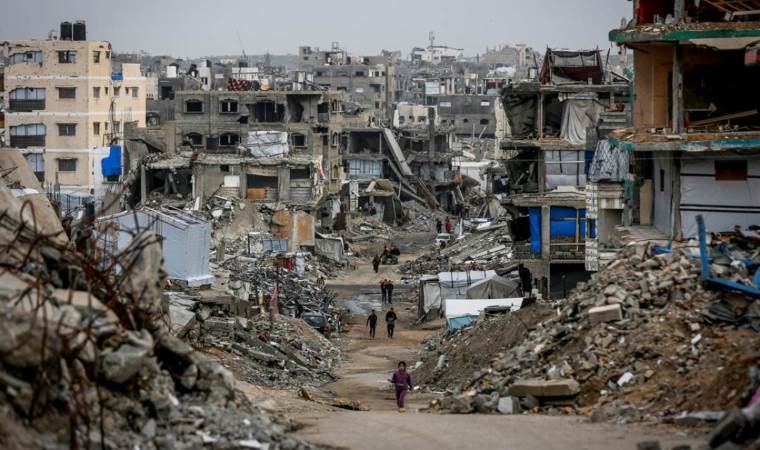
Since the start of its genocidal war on Gaza in October 2023, Israel has killed more than 72,000 people, wounded over 172,000 others, and caused widespread destruction affecting 90% of the civilian infrastructure.
The Israeli army and occupiers have also intensified operations across the West Bank since then, killing more than 1,150 Palestinians, wounding about 11,750 others, and arresting nearly 22,000 people, according to Palestinian figures.
Most Read News
-
 22-year-old worker dies after fall at Rome’s Colosseum
-
Netanyahu failing after Macron criticizes occupier
-
White House defends Trump’s media ban
-
Trump meets with Venezuela’s acting president in 1st
-
Netanyahu won’t meet Trump during ‘brief’ UN visit
-
Azerbaijani president pardons French national convicted
-
Indonesia records 175,000 respiratory infections as
-
Board of Peace to unveil $2.45B Gaza recovery plan