Authors Columns of the Day Sport Guest Life All Authors

As 2026 starts: “The Big Picture”
As we enter 2026, a new ‘big picture’ emerges shaped by extraction
imperialism, a new wave of fascism, an artificial intelligence beginning to
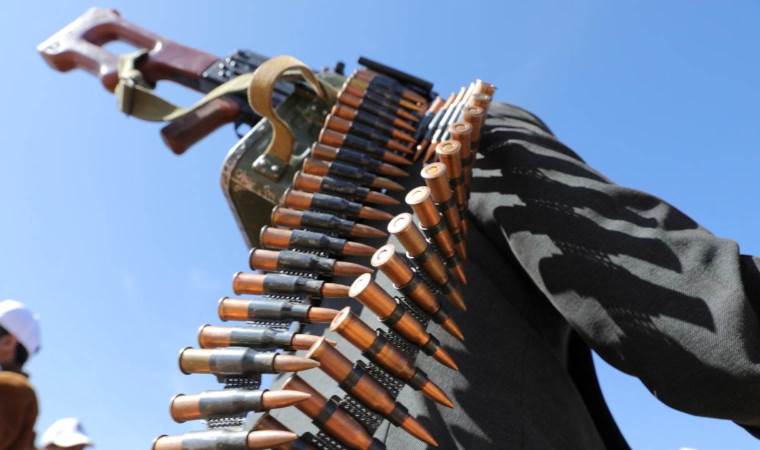
occupy the centre of life’s most basic domains, an accelerating arms race, and
the multiple uprisings of Generation Z. As I was writing this column, the
United States bombed Venezuela’s capital and abducted President Maduro. Now, it
is even easier to name this ‘big picture’.
Who will seize which resource, and where?
The new era of U.S. foreign policy in the 1980s was called globalization.
This time, however, it is extraction imperialism. The basic geopolitical
question, in this new era is “who can extract what, from where, and for
how long?”
Extraction imperialism does not create order, produce allies, or establish
norms. It pillages directly. Its eyes are on Canada’s water and timber,
Greenland’s rare earth elements, Ukraine’s lithium, titanium, and Venezuela’s
and Nigeria’s oil reserves. Diplomacy now proceeds through lists of resource
reserves and supply chains. International politics is increasingly turning into
a global licensing and auction ground. In other words, relations between states
now unfold over questions such as to whom minerals, energy, data, and geography
will be allocated, and at what price.
The Middle East, Ukraine, Taiwan, the Red Sea, and the Eastern
Mediterranean converge in the same equation: in the age of energy transition,
fossil fuels remain vital; rare minerals, indispensable. Wars today feed on
logistical concerns. Even peace talks are shaped by decisions over which power
will control which resources.
The truly critical domain of this new extraction regime is data, algorithms, and attention-the strategic raw materials of the 21st century. The competition over artificial intelligence is therefore not merely technological but political, military, and cultural- a struggle for full spectrum power. The accelerating AI race along the U.S.- China axis is reshaping every sphere, from production to warfare, from surveillance to the engineering of public opinion. AI is qualitatively transforming the arms race as well. Autonomous weapon systems, algorithmic targeting, cyberattacks, and space technologies push the speed of warfare beyond human decision-making. The risk of miscalculation and the possibility of small crises escalating into large conflicts is increasing. As we enter 2026, fears surrounding AI’s tendency to move beyond human control are growing- not only among philosophers and sociologists but also among elites in the technology sector itself.
escalating into large conflicts is increasing. As we enter 2026, fears surrounding AI’s tendency to move beyond human control are growing- not only among philosophers and sociologists but also among elites in the technology sector itself.
Imperialism in overseas, fascism at home
Internally, this geopolitical environment is cultivating a new form of state. Under the pretext of security, freedom of expression is narrowing, algorithmic surveillance is expanding, the language of permanent emergency becomes routine, and opposition is coded as the domestic enemy. Across the world, authoritarian and totalitarian techniques in many shapes and forms, are normalized and the process of fascism has become mundane.
At this point, artificial intelligence is not merely a tool but a multiplier in the transformation of authoritarianism into totalitarianism. For those in power, society is no longer something to be persuaded but a dataset to be managed. Law yields to regulation; politics to risk management; criticism to flattery. “Liberal democracy” (parliaments and elections) has become the fig leaf covering the obscenities of “fascism as a process.”
Yet, against this picture, there is also rebellion. On a global scale, a highly educated digitally connected but politically excluded and precarious generation, so called Generation Z, realize that the future once promised to them has already been consumed: extraction imperialism steals not only minerals and data but also the very idea of the future. Last year they began to rebel. However, this rebellion is not yet organized; it is fragmented, angry, and directionless.
Thus, the “big picture” of 2026 becomes clearer: on one side, a world where war, artificial intelligence, and extraction imperialism have been normalized; on the other, one where “fascism as a process” has become routine. A full-scale world war may still be unlikely, yet small, continuous, and widespread conflicts- along with algorithmic power and social eruptions-seem to define a lasting period, at least throughout 2026. As the IMF/World Bank report, quoting communist leader Gramsci, (we truly live in interesting times!) reminds us this is indeed “the time of monsters.”
Yazarın Son Yazıları All Columns
Günün Köşe Yazıları
Most Read News
-
 Iceland summons US ambassador over Trump map showing
-
Netanyahu warned by UAE president before Oct. 7 events
-
Russia vows 'harsh' response after Hungary expels 10
-
New Mexico leaders reject Trump's suggestion to rename
-
Oil prices continue to rise amid ongoing US-Iran
-
Death toll from floods on Nepal-China border hits 1,400
-
Houthi attacks injure 73 civilians in southern Saudi
-
2 Gazans killed, 2 injured by Israeli fire in fresh