France confirms 1st hantavirus case linked to MV Hondius outbreak
France has recorded its first confirmed hantavirus case in a passenger repatriated from the MV Hondius cruise ship, where an outbreak was detected, the health minister said Monday.
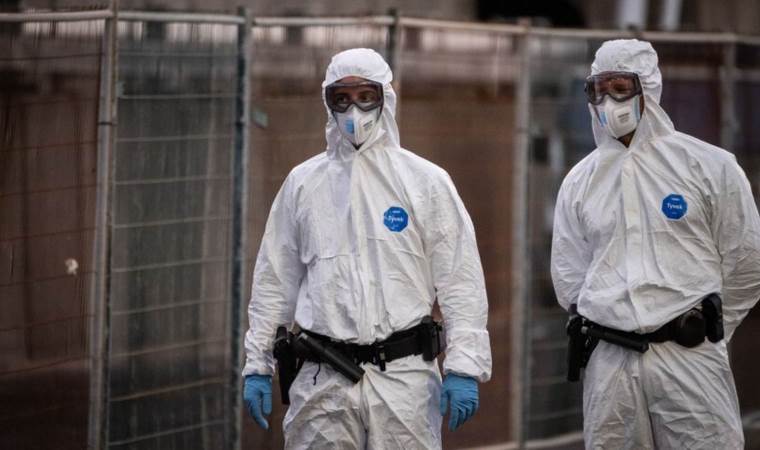

The patient is a woman who was among five French nationals evacuated from the vessel and flown from Spain's Canary Islands to France on Sunday, Stephanie Rist told radio France Inter.
She developed symptoms during the evacuation flight between the Spanish island of Tenerife and France's Le Bourget airport near Paris.
“Tests have come back positive for hantavirus,” Rist said, adding that the patient’s condition had “unfortunately deteriorated overnight.”
French Prime Minister Sebastien Lecornu said through US social media company X that the woman had already shown symptoms during the repatriation flight, which landed on Sunday shortly before 4.30 pm local time (1430GMT).
The four other French nationals tested negative for the virus but will remain in isolation for at least 15 days, the health minister said, adding that authorities can extend isolation measures under existing regulations.
Authorities have also identified 22 French nationals who were on earlier flights linked to the case cluster, including routes between Saint Helena and Johannesburg and between Johannesburg and Amsterdam.
The Health Ministry said eight French nationals from the Saint Helena-Johannesburg flight were placed in isolation nearly a week ago, while others have been instructed to contact health authorities and self-isolate.
Spain declares May 6 as 'day zero'
In Spain, health authorities said two women hospitalized in Barcelona and Alicante over suspected exposure to hantavirus tested negative in PCR (polymerase chain reaction) tests.
Spanish Health Ministry officials said the 14 Spanish passengers who transferred and quarantined at Madrid’s Gomez Ulla hospital on Sunday were in good condition.
The officials also said May 6 had been established as “day zero” for quarantine calculations after consultations with the World Health Organization, the European Center for Disease Prevention and Control, and Spanish health authorities, meaning isolation measures could last up to 42 days from that point.
They added that the first week of quarantine for the Spanish passengers would be stricter, including repeated PCR testing and a ban on visits before authorities reassess the situation.
Spain’s Health Ministry said “all necessary measures” had been taken since the beginning of the operation to “break possible chains of transmission” following confirmation of two positive cases linked to the ship, an American and a French woman.
The ministry said the MV Hondius was carrying out refueling and provisioning operations Monday morning, while the final repatriation flights to Australia and the Netherlands were expected to depart from Tenerife later in the day. The remaining disembarkation operations were expected to finish between 5 pm and 6.30 pm local time (1500-1630GMT), with the ship scheduled to depart at around 7 pm (1700GMT).
It added that the ship would later depart for the Netherlands carrying part of the passengers’ luggage for disinfection, as well as the body of one of the deceased passengers, in line with agreed protocols.
Meanwhile, Spain’s Health Ministry rejected concerns raised by Canary Islands regional officials that rodents from the ship could reach shore and spread the virus, saying there were no rats aboard the vessel and describing such a scenario as highly unlikely.
Germany
In Germany, authorities said four passengers from the MV Hondius cruise ship were transferred early Monday to Frankfurt University Hospital for observation. Officials said none showed symptoms.
The Health Ministry said close contacts would quarantine at home—potentially for up to 45 days—because of the virus’s long incubation period. “Over the coming weeks, these close contacts will be monitored continuously and closely for symptoms,” a ministry spokesman said.
A German woman who traveled on the Hondius and was transferred to Germany last week remained in stable condition at the University Hospital Dusseldorf. The hospital said in a press release that extensive virological testing had been initiated and that results so far did not indicate an infection.
Hantavirus is a rare disease usually transmitted through infected rodents or their droppings, though the strain responsible for this outbreak can also spread between humans.
Ayhan Simsek contributed to this story from Berlin.
Most Read News
-
 Azerbaijani president pardons French national convicted
-
Indonesia records 175,000 respiratory infections as
-
Trump meets with Venezuela’s acting president in 1st
-
Netanyahu won’t meet Trump during ‘brief’ UN visit
-
Board of Peace to unveil $2.45B Gaza recovery plan
-
22-year-old worker dies after fall at Rome’s Colosseum
-
Netanyahu failing after Macron criticizes occupier
-
White House defends Trump’s media ban