European Parliament backs overhaul of rules on return of irregular migrants
The European Parliament on Wednesday approved reforms to EU rules governing the return of third-country nationals staying illegally in the bloc, in a move aimed at speeding up procedures while reinforcing cooperation with non-EU countries.
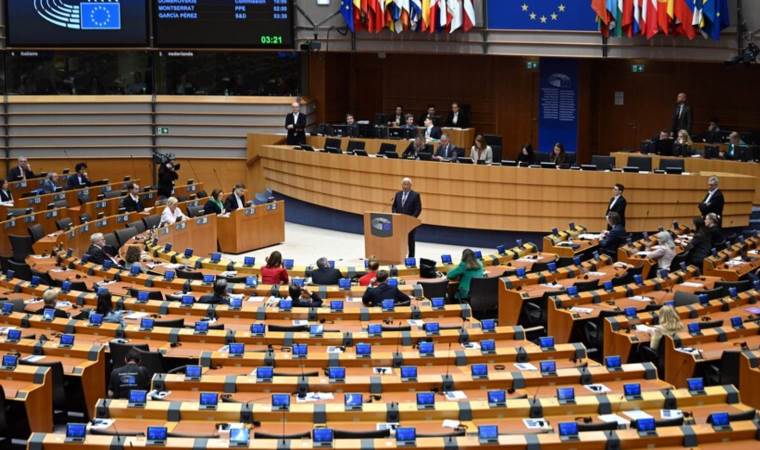

According to a statement, lawmakers adopted the proposal in the full European Parliament by a vote of 418-218, with 30 abstentions, following a provisional agreement reached with the EU Council on June 1.
"After almost 20 years of standstill, Europe finally has them. Return is the final piece in Europe's migration system, and I'm hugely proud it's now in place," said Dutch lawmaker Malik Azmani, who also serves as rapporteur for regulation.
The new framework requires that a return decision issued by national authorities obliges the person concerned to leave the member state immediately or within a set deadline.
Authorities also stress that the measures must comply with fundamental rights, international law, and the principles of non-refoulement and the prohibition of collective expulsions.
Under the agreed rules, individuals subject to a return decision must cooperate with national authorities.
Member states will be allowed to detain individuals on a case-by-case basis where there is a risk of absconding, non-cooperation, or a security concern.
Detention will require an administrative or judicial order and may last up to 24 months, with a possible extension of six months in specific circumstances.
Authorities may also apply alternatives to detention, including electronic monitoring, financial guarantees, or obligations to reside at designated locations.
National authorities will be permitted to carry out investigative measures to facilitate returns, including searches of individuals, residences, and personal belongings, subject to judicial or administrative authorization and legal safeguards.
The legislation also allows for so-called "return hubs" in third countries that agree to host returnees, excluding unaccompanied minors.
Such arrangements must comply with human rights standards and international law, and member states must notify the European Commission and other EU countries before implementation, under the new rules.
Most Read News
-
 Russian president, Saudi prince discuss situation in
-
Romanian court grants former presidential candidate
-
UN chief says Israeli actions in occupied West Bank
-
Israeli prime minister lashes out at New York mayor
-
El Nino strengthening rapidly, health impacts expected
-
Trump attacks news outlets after lawsuit over White
-
US plans to establish 2 new military bases in Greenland
-
Yemeni government forces seize strategic mountain