Zelenskyy says he's on 'same side' as Trump on need to end war but differs on means
Ukrainian President Volodymyr Zelenskyy said on Wednesday that he and US President Donald Trump share the goal of ending the Russia-Ukraine war but differ on the means of achieving it.
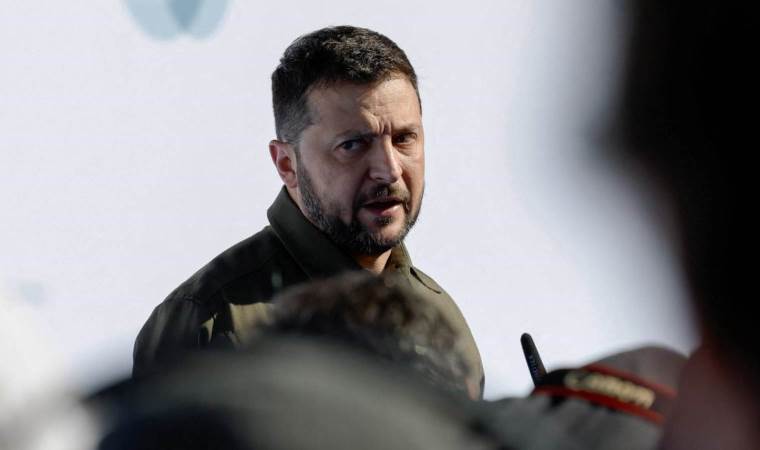

Zelenskyy said on Telegram he argued that Ukrainians understand Russian society better than the US because of their shared Soviet past and years of living alongside Russians.
“We are on the same side with President Trump when we talk about the need to end this Russian war. But we see different tools to achieve this goal,” he said.
Asked about his opinion of Russian President Vladimir Putin, Zelenskyy described him as “a deeply Soviet person” in both his worldview and mentality.
“Speaking the truth is one of our weapons,” Zelenskyy said, adding that he would continue to speak openly as Ukraine faces pressure and would use all available diplomatic channels to defend the country.
Zelenskyy also claimed that Russia had long targeted Ukraine’s data infrastructure and cyberspace, prompting Kyiv to develop ways to counter the attacks.
He said Ukraine’s decentralized digital infrastructure had helped preserve mobile communications and internet access despite attacks on data centers, adding that Ukraine’s strikes had a greater impact on Russia because of its more centralized systems.
Zelenskyy told Ukrainian media that territorial issues in negotiations with Russia could only be discussed by the two countries' leaders, outlining US proposals that included demilitarized zones, solutions for the Zaporizhzhia Nuclear Power Plant, possible territorial exchanges, and a buffer zone in Donbas.
He said Ukraine was ready to discuss these, but noted such matters could not be resolved through preliminary documents or informal talks alone.
The president then criticized Russia's demand to roll back NATO's military presence to its 1997 borders as an attempt to reshape Europe's security architecture, arguing that discussions of Russian security demands would be premature until the war's outcome and Ukraine's own guarantees were clear.
Zelenskyy also opposed closer US-Russian economic ties reportedly involving a diesel fuel deal, fertilizers, natural gas, frozen assets, and sanctions relief, arguing they could carry long-term risks for Washington, calling it an "economic marriage" based on Russian resources that may not serve US interests over time.
He also voiced concern about a possible meeting between Trump, Putin, and Chinese President Xi Jinping in Beijing, saying he did not want it to become "Yalta 2.0," a reference to the 1945 conference at which the Allied powers discussed the post-World War II order, and insisted its agenda should include the war in Ukraine and the Middle East.
Regarding Kyiv's winter preparations, he said the capital was inadequately prepared and that national and local authorities, including Mayor Vitali Klitschko, must work together despite the difficulties.
He cited Kharkiv as better prepared and noted that several candidates had declined the offer to lead Kyiv's military administration.
He also stressed that Ukraine receives about 12 Patriot interceptors monthly from the US while using 35 in October alone, noting that Washington itself faces shortages, and that he had asked Trump to approve a special package ahead of winter.
Most Read News
-
 EU prosecutors still await von der Leyen’s statement in
-
Netanyahu’s bloc projected to secure 54 seats, Eisenkot
-
Zelenskyy says he's on 'same side' as Trump on need to
-
S.Korea, US delay key security talks amid Seoul’s demand
-
China says Beijing takes football star Mbappe’s apology
-
Russian diplomat says Moscow 'in preparatory phase' for
-
6 in 10 Belgian nuclear companies postpone investments
-
French Senate adopts bill requiring protesters to pay