US fuel restrictions push Cuba’s tourism industry into sharp decline
Restrictions imposed by the US on fuel shipments to Cuba since the start of the year have triggered a severe downturn in the country’s tourism industry, with arrivals falling sharply during the first quarter.

Tourism operators say fuel shortages and widespread power outages are the main drivers behind the sudden collapse. A growing number of hotels have shut down due to falling visitor numbers, while international airlines have been cancelling direct flights one after another.
According to 2025 tourism data released by Cuba’s statistics office, visitor arrivals dropped sharply, down 18% from 2024.
The figure also marks a 62% decline from the record 4.7 million tourists seen in 2018. In February 2026 alone, arrivals plummeted 56.6% compared with the same month in 2025.
The data points to what officials describe as the worst tourism season in two decades.
Tourism, which became Cuba’s most important source of income following the collapse of the Soviet Union and especially since the 2000s, is now struggling to survive.
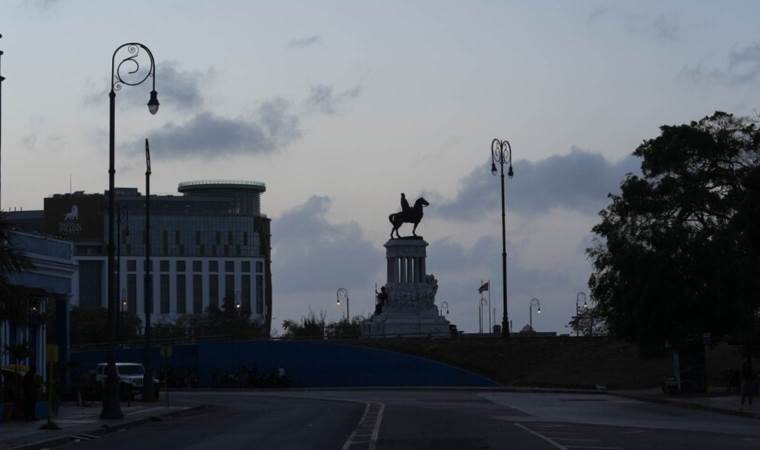
Once crowded with European, Canadian, and Turkish visitors, Havana’s streets have fallen unusually quiet. Many shops are closed, and the restaurants that are still open often sit empty.
During what is typically the busiest period of the year, it has become rare to see anyone in the capital outside of local residents.
Tourism sector hit hard with rough start to season
Tourism is one of the most attractive employment sectors for Cuban university students who speak foreign languages, offering relatively high earnings and a direct link to the outside world.
However, as of April, the arrival of tourist groups abruptly stopped.
University student Hamanda Cardenas opened the shop where she works as usual, but found no customers.
Cardenas said: “Tourism has dropped quite a lot in the past few days; you can notice it because this is a very busy alley with tourists, also with Cubans, but in the past few days you can clearly see the change that there isn’t as much tourism.”
“And I feel quite affected. Right now the universities are closed due to the fuel issue, electricity, and those kinds of things; we can’t attend classes, we have to do them through the internet.”
Another student, 21-year-old Alejandro Tuyanque, works as a waiter and checks his phone for news updates as tourism dries up.
“Everything has declined, total decline. It’s a bit difficult, there’s not much tourism anymore, sales are bad,” he said.
Alexander Castellano, a street vendor waiting for customers from the seat of his three-wheeled bicycle, said: “We practically depend on tourism. Right now at this moment tourism is very low.”
Electrical engineer Santiago Rodrigez, who has been working in tourism with his wife for a dozen years, said the past three months have been the worst period they have experienced.
“This year is the most difficult, so, because (there’s) no work, no work.
“I’ve had a tourism (sales) drop of about 80%, 70% more or less. So we’ve been punished in that sense,” he said.
Classic Havana streets fall silent
Cuba’s iconic colorful American classic cars, once a famed landmark of Havana, are now rarely seen.
Whereas dozens used to fill Havana’s Central Park, where the statue of Jose Marti is located, now the number of cars in the square could be counted on two hands.
The combination of low tourist numbers, fuel shortages, and the high gas consumption of these old vehicles has sharply reduced their presence on the streets.
Turkish tourist numbers also shrink
Several international airlines have suspended direct flights to Cuba.
As news of the country’s difficulties spreads, tourists from Canada, Europe, and Türkiye have also dwindled to minimal levels.
During filming in Havana, Anadolu spoke to two of the few Turkish visitors on the island.
Doga Koreke, who arrived on the last direct Turkish Airlines flight from Istanbul, said the city center itself posed no issues, but conditions worsened significantly outside central areas.
“Once you go 15–20 minutes or half an hour away from the city center, you actually enter a very different world. People really need a lot of things.
“The most basic thing is electricity. Because in some areas they only get three hours of electricity, and in others five hours a day,” he said.
Tourism remains Cuba’s most important source of foreign currency, alongside limited mineral exports.
While both the public and authorities hope for a recovery to pre-pandemic levels following the decline caused by COVID-19, the outlook now depends heavily on policy decisions in Washington.
