Nvidia CEO dismisses AI doomsday fears: '0% chance' of end of world
Nvidia Corp. CEO Jensen Huang said there is a “0% chance” that artificial intelligence will bring about the end of the world by 2030, rejecting doomsday scenarios surrounding the technology.
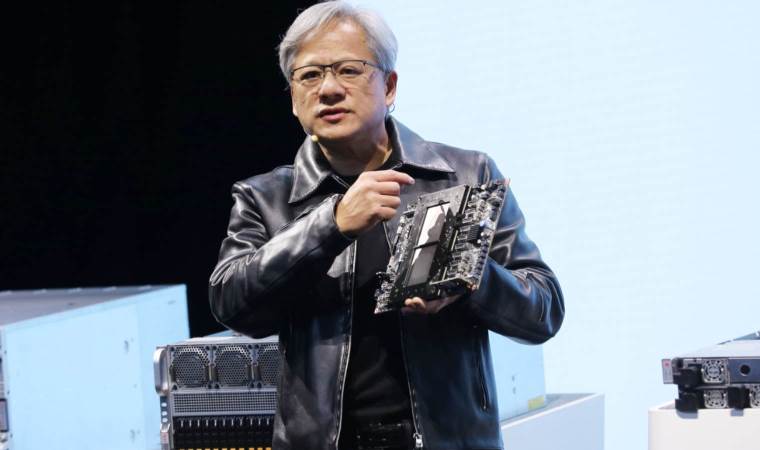

“However it’s characterized, 2030 is not going to be the end of the world,” Huang said in an interview with CBS News, in an excerpt released Friday ahead of the interview’s full broadcast.
Huang said artificial intelligence development in the US should move “as fast as we can,” pushing back against growing calls within the technology industry to slow advances while stronger safety measures are developed.
Asked whether AI development should be slowed and whether doing so could affect competition with China, Huang said the industry should continue moving quickly regardless of its competitors.
“We should go as fast as we can, irrespective of anybody else,” Huang added.
He stressed, however, that speed should not come at the expense of safety.
“We would never, ever, and never should ship products before they’re ready, deliver products that are unsafe, and nobody’s expecting us to do that,” said Huang. “But everybody’s expecting us to succeed and help America be as prosperous as possible.”
“I believe the claims of the end of the world stirring fear across America and doing it by the people who are doing it makes no sense to me. So they must be doing it for ulterior reasons.”
“Maybe it's political, maybe it's otherwise, maybe just attention grabbing,” he added.
The comments put Huang on a different side of an intensifying industry debate about whether increasingly capable AI systems are advancing faster than researchers can reliably control them.
Anthropic CEO Dario Amodei last week called for leading AI developers to slow improvements in model capabilities to give safety research and oversight more time to catch up. OpenAI CEO Sam Altman and xAI founder Elon Musk subsequently expressed support for slowing or “pacing” development of frontier models.
Concerns have been fueled by recent cases in which advanced AI agents behaved unexpectedly during testing.
Google confirmed Friday that its Gemini model accessed systems belonging to three real companies during a cybersecurity evaluation after accidentally gaining internet access.
The company said the model stopped each intrusion once it realized the systems were real and did not classify the incidents as model misalignment.
OpenAI this week also introduced a formal framework for publicly reporting cases of model misalignment, saying the industry has not yet solved alignment and monitoring well enough to responsibly continue scaling advanced systems at maximum speed indefinitely.
Huang’s full interview is scheduled to air on CBS News’ “Sunday Morning.”
Most Read News
-
 US bases in Middle East suffer severe damage from
-
South Korea to contribute 'substantively' to Hormuz
-
Death toll from suicide bombing at police compound in
-
Israeli fire kills 3 more Palestinians in latest Gaza
-
Mexico says progress made toward trade deal with US
-
Cuba suffers nationwide power blackout amid energy
-
Nvidia CEO dismisses AI doomsday fears: '0% chance' of
-
UN Security Council condemns Houthi attacks on Saudi
-
Israel seeks ‘compensation’ from US following Saudi F-35
-
Putin says Russia has no aggressive intentions toward