'No economic upside': Iran war threatens already strained US finances
Escalating tensions in the Middle East following attacks by the US and Israel on Iran and subsequent Iranian retaliations pose a new risk to the US economy, which is already grappling with tariffs, weak employment, and persistent inflation.
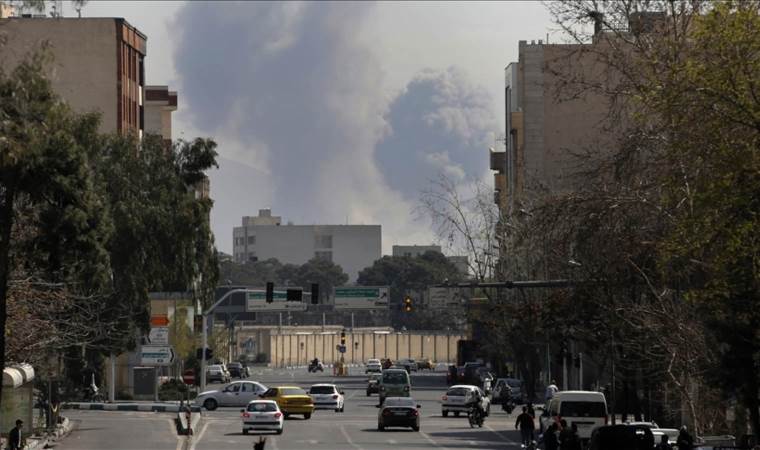

The operations launched by the US and Israel on Feb. 28, followed by Iran’s retaliatory strikes on targets in countries housing US bases such as Qatar, the UAE, and Bahrain, have increased uncertainty in global markets.
Concerns that a prolonged conflict could disrupt trade routes and reignite inflation have grown as the duration of the clashes remains unclear.
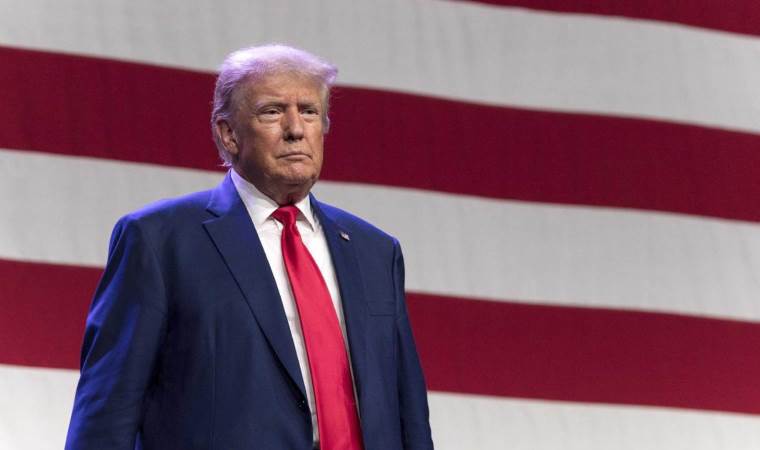
US President Donald Trump estimated that the operations would last four to five weeks but noted that they have the capacity to continue longer if necessary.
Pressure on oil, gasoline prices
Tanker traffic in the Strait of Hormuz, a transit point for about a fifth of the world's seaborne oil, has slowed sharply since the conflict began.
The threat of Iran closing the strait pushed Brent crude prices above $80 per barrel.
The rise in oil prices has negatively impacted gasoline prices, which Trump often boasted of lowering.
According to American Automobile Association data, the average price of gasoline in the US rose 7.5% over the past week to reach $3.20 per gallon.
Complicating inflation outlook
Rising tensions in the Middle East throw up a new challenge to the Fed, which has paused interest rate cuts and maintained a cautious stance due to high inflation.
Although some inflation indicators slowed in recent months, the inflation rate remains above the Fed's 2% target.
The Consumer Price Index rose 2.4% annually in January, but an energy shock following recent tariffs threatens these gains.
Former Treasury Secretary and Fed Chair Janet Yellen warned on March 2 that economic growth would suffer depending on the conflict's impact on the oil market, making the Fed's job harder.
'No economic upside'
Mark Zandi, chief economist at Moody's Analytics, told Anadolu that the military conflict is devastating for everyone involved, but the economic fallout has been limited, at least so far.
"There is no economic upside to any of this, as the higher oil prices will weigh on growth and push inflation higher," Zandi said.
Zandi noted that every sustained $10 per barrel increase in oil prices will increase the cost of a gallon of regular unleaded by 25 cents and reduce real GDP by 10 percentage points.
"If the increase in oil prices is held to $10 per barrel and isn’t sustained, the economic consequences will be negative, but small," he added.
Increased risk factor
Olu Sonola, head of US Economic Research at Fitch Ratings, described the situation as an incremental risk factor -- one more on top of several already facing the US economy.
Sonola said that the main transmission channels would be energy prices, consumer and business confidence, and spillover into equity markets and financial conditions.
"At this stage, I don't expect higher oil prices to materially lift US inflation," Sonola said.
He explained that oil prices would need to stay near $100 for an extended period to become a permanent inflation problem.
Regarding the Fed, Sonola noted that the bank tends to focus on core inflation metrics, excluding volatile food and energy components.
He added: "So, I don’t think this meaningfully complicates the rate path unless we see a scenario where oil prices move much higher and stay there long enough to feed into broader inflation dynamics.
"In that case, it could become more relevant for policy -- but absent that, it’s more likely to be treated as noise than signal."
Most Read News
-
 White House defends Trump’s media ban
-
Azerbaijani president pardons French national convicted
-
Indonesia records 175,000 respiratory infections as
-
Trump meets with Venezuela’s acting president in 1st
-
Netanyahu won’t meet Trump during ‘brief’ UN visit
-
Board of Peace to unveil $2.45B Gaza recovery plan
-
22-year-old worker dies after fall at Rome’s Colosseum
-
Netanyahu failing after Macron criticizes occupier