NATO chief downplays concerns over new US strategy, affirms American commitment to alliance
NATO chief Mark Rutte on Thursday downplayed concerns over the new US national security strategy document, emphasizing that the Trump administration remains committed to the alliance.
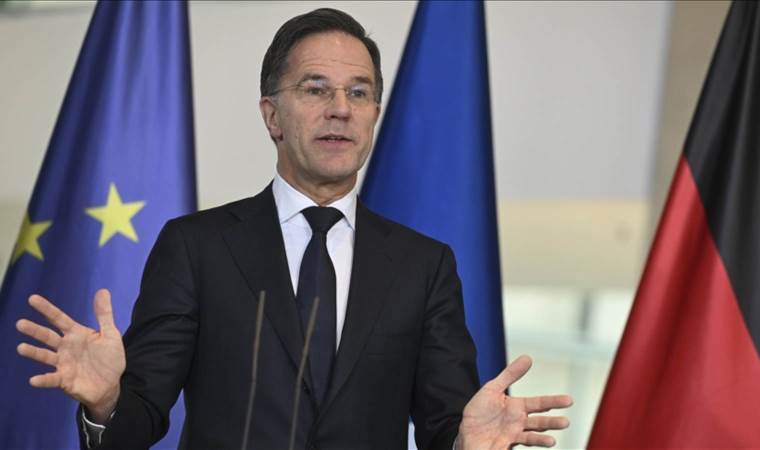

Speaking at a joint news conference with German Chancellor Friedrich Merz in Berlin, Rutte said the allies are aware of US President Donald Trump's expectations and have taken steps to increase their defense spending and assume more responsibility.
"As NATO secretary general, of course, my main focus is to make sure that the alliance, as a whole, is safe. When I, through that lens, look at the US national security strategy, it clearly states that the US is committed to Europe," Rutte said.
“And the US is committed to NATO. It also acknowledges that for the whole of the alliance to stay safe, you need strong cooperation within NATO, between the European allies and Canada and the United States,” he added.
The new US national security strategy document, released last week, outlined the Trump administration's priorities in foreign and security policy. It focused on the Indo-Pacific region while rejecting European governments' characterization of Russia as an "existential threat.” The document also had a critical view of accepting new NATO members, stating it is time to move away from viewing NATO "as a perpetually expanding alliance."
In contrast to Rutte's reassurances, German Chancellor Merz expressed concern about the US national security strategy document, emphasizing that European countries must strengthen their defense capabilities and take more responsibility for their own security.
"For the German government, strengthening the European pillar of NATO in foreign and security policy is our absolute priority. The new national security strategy of the US, which we saw last week, confirms that we are on the right path here," Merz told reporters.
"Germany and Europe are right to systematically invest in their own strength—in security policy, migration policy, economic policy, and many other areas. We are doing this out of our own conviction, not because anyone is pushing us to do so, but because it is in our interest for Europe to be self-sufficient," he said.
Most Read News
-
 White House defends Trump’s media ban
-
Azerbaijani president pardons French national convicted
-
Indonesia records 175,000 respiratory infections as
-
Trump meets with Venezuela’s acting president in 1st
-
Netanyahu won’t meet Trump during ‘brief’ UN visit
-
Board of Peace to unveil $2.45B Gaza recovery plan
-
22-year-old worker dies after fall at Rome’s Colosseum
-
Netanyahu failing after Macron criticizes occupier