Iran says US ‘not serious’ about talks, rejects claims over nuclear program
Iran accused the US on Monday of lacking seriousness in negotiations, saying Washington has repeatedly confused diplomacy with imposing demands on Tehran.
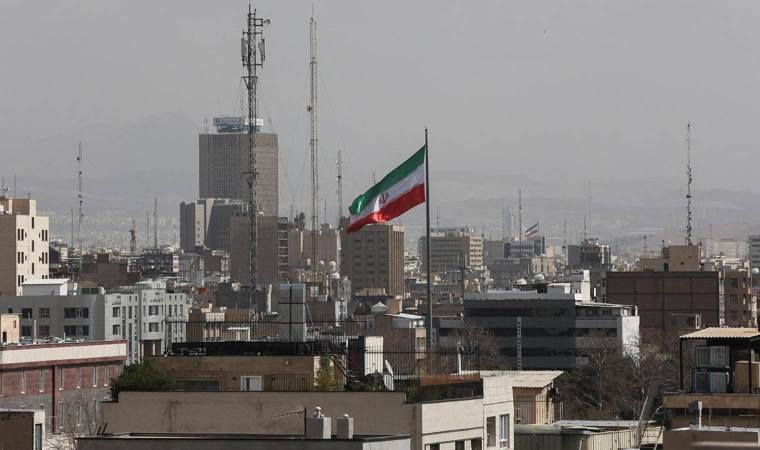

“The American side is not serious about negotiations,” Foreign Ministry spokesman Esmaeil Baqaei said during his weekly news conference, as cited by the state-run IRNA news agency.
He accused Washington of repeatedly making false claims, recalling that US President Donald Trump had expressed support for negotiations shortly before the US military attacks on Iran in June 2025.
“What do you call this? Do you see any goodwill in this approach?” he asked.
Baqaei said Tehran had not received any new European proposal for negotiations beyond a political statement, criticizing Britain, France and Germany for their positions during the conflict.
He accused the three countries of following Washington’s lead on the restoration of UN sanctions and failing to condemn military attacks against Iran.
No nuclear weapons
Baqaei reiterated that Iran had never possessed nuclear weapons or sought to acquire them, accusing Washington of using allegations about Tehran’s nuclear program to justify military action.
He said Iran had negotiated in good faith and signed the 2015 nuclear agreement, but the US withdrew from it three years later.
The spokesman accused the US administration of being influenced by Israeli claims about Iran’s nuclear program, describing allegations that Tehran was developing a nuclear bomb as a justification for military aggression.
Missing Iranian pilots
Baqaei said Iran continued to hold Qatar responsible for clarifying the fate of three Iranian pilots whose aircraft were hit in the Gulf country.
“Until we have evidence of their deaths or receive precise information and documentation, we assume that the country where their aircraft were hit must be held accountable,” he said.
He added that Tehran was pursuing the matter in coordination with its military leadership and through technical delegations and legal discussions.
Baqaei also confirmed that a Qatari delegation recently visited Tehran, saying the trip involved bilateral cooperation and regional mediation efforts.
He described such visits as normal during regional conflicts, noting that Qatar had sought to convey messages and present its positions.
Commenting on Israel’s upcoming elections and threats of military action against Iran, Baqaei accused Israeli politicians of competing over who could commit more crimes.
“It makes no difference to us who takes charge of a regime with a history of violence and killings,” he said.
Russia visit
The spokesman confirmed that President Masoud Pezeshkian would travel to Russia on Monday night to attend a summit of gas-exporting countries.
He said the visit would provide opportunities to strengthen energy cooperation with Moscow and hold consultations with other major energy-producing countries.
Baqaei also addressed border-related difficulties with Pakistan and Iraq, saying discussions with Islamabad were progressing positively.
He said Pakistan had described the issue as technical while also raising security concerns, including reports of planned attacks.
Regarding Iraq, he said Iranian diplomatic missions were pursuing the matter, warning that US pressure on Baghdad could harm the Iraqi population and bilateral relations.
Baqaei said Iran summoned the Italian ambassador on Sunday to express concern over the authorities’ handling of protests in European countries.
He accused France, Belgium and Italy of using excessive force and restricting the right to protest, saying such measures were inconsistent with their human rights obligations.
The French ambassador had also been summoned previously, he added.
Saudi Arabia and Yemen
On the conflict involving Saudi Arabia and Yemen, Baqaei said regional security was interconnected and instability in one country could affect others.
He stressed that the dispute should be resolved between Saudi Arabia and Yemen, reiterating Tehran’s readiness to help facilitate a settlement.
“Military approaches make problems more complicated and cause extensive damage,” he said, expressing hope that Saudi Arabia would pursue a negotiated solution.
Tensions between Washington and Tehran have persisted since the US and Israel launched military attacks on Iran on Feb. 28, triggering a regional conflict and disrupting shipping through the Strait of Hormuz.
On June 18, Trump and Pezeshkian signed a Pakistan-mediated memorandum of understanding, aimed at ending hostilities, reopening the strategic waterway and paving the way for a broader agreement.
However, disagreements over the implementation of the understanding, including the US naval blockade, sanctions and navigation through the strait, have continued to hinder diplomatic efforts.
Earlier this month, Iran said restoring security to the Strait of Hormuz remained central to negotiations with Washington, insisting that the US must take specific steps to resolve the standoff.
Most Read News
-
 Britain must be ready for war within 1,000 days: Defense
-
Egyptian president meets UN chief, calls for 'just'
-
Iran says US ‘not serious’ about talks, rejects claims
-
Spain's Sanchez predicts election victory despite
-
China’s Communist Party convenes 5th plenum
-
Top EU officials hail Lula's reelection, vow to deepen
-
Israel to deploy 22,000 police officers amid fears of
-
German intelligence agencies plan Google cloud system