Iran says negotiations with US will succeed when ‘rights of Iranian people are respected’
Iran’s Foreign Minister Abbas Araghchi said on Sunday that negotiations with the United States will succeed “only when the rights of the Iranian people are acknowledged and respected.”
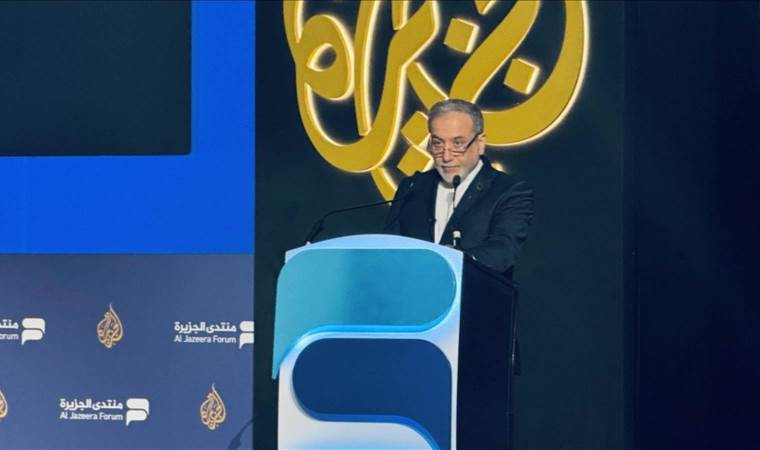

Speaking at a diplomatic forum in Tehran organized by the Iranian Foreign Ministry, Araghchi said Iran is ready “to answer” and “clarify” any “questions or ambiguities” about the country’s nuclear program through diplomacy.
“Knowledge cannot be eliminated through bombardment; technology cannot be destroyed. Technology exists, knowledge exists, and there is no alternative to negotiation,” he said.
“This is exactly what I told the American team the day before yesterday, and in fact their presence at the negotiating table is precisely for this reason: they tried other approaches,” he added, referring to last year’s US-backed Israeli war on Iran.
Talks between Tehran and Washington resumed in Muscat, Oman, on Friday after weeks of heightened tensions following the US military buildup in Persian Gulf waters near Iran.
Regional countries, led by Turkiye, played a key role in easing tensions and facilitating talks, which had been suspended following the 12-day war in June 2025.
Araghchi affirmed that negotiations will succeed when the rights of the Iranian people are “acknowledged, respected, and when we are able to exercise our rights.”
“We are not asking anyone to recognize our rights; our rights are already established, our rights exist. What we want is respect for our rights,” he told a gathering that included Iranian and foreign diplomats as well as journalists and academics.
He said Iran’s “source of power” is to “stand firm against bullying, domination, and external pressures.”
“They fear our nuclear bomb, while we are not pursuing a nuclear bomb. Our nuclear bomb is the power to say ‘no’ to the great powers. The secret of the Islamic Republic’s strength lies in this very ability to say no to power,” the top Iranian diplomat stated.
He added that “becoming strong” is an imperative for Iran, while emphasizing that “smart diplomacy” is also necessary under the existing conditions.
Law of jungle
Araghchi said Iran is confronted with a power that says “everything is based on force,” referring to the US.
“This approach is now being implemented openly: wherever it wants, it attacks; whichever country’s president it wants, it abducts; it tells one country you must do this, tells another you must give me that island, tells another you must change the name of that region,” he noted.
“Of course, US policy has always been this way, achieving its objectives through force, but previously there was always an effort to provide a cover of international law and international regulations, to find some form of justification for its actions.”
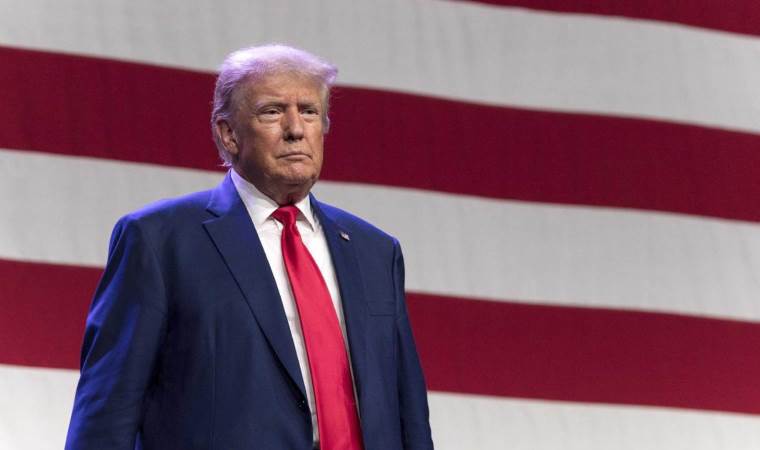
Taking a dig at US President Donald Trump, Araghchi said previously when the US wanted to attack somewhere, it would first go to the UN Security Council and obtain a resolution that served as authorization for its action, or it would form an international coalition to lend legitimacy to what it was doing -- but the new US president has “cast all of this aside.”
“He says, we are strong, we have force, and what we want must be realized. This is, in reality, a return to the law of the jungle: whoever is stronger imposes their will on others,” said Araghchi.
“For this reason, becoming strong is an obligation for us, and one of the keys to becoming strong is the power of resistance -- the ability to withstand pressure.”
Heavy price
Araghchi said Iran has “paid a heavy price” to have a “peaceful nuclear program” and to possess “enrichment capability.”
“Enrichment and the nuclear program are considered national necessities and meet the country’s needs in various fields, including agriculture, healthcare, and other sectors. Enrichment itself is even essential for our future needs for nuclear fuel and for having nuclear power plants. All of this has been stated repeatedly,” he added.
At a press conference following his speech, Araghchi said the general framework for Iran is “clear,” noting that Tehran wants sanctions to be lifted.
On the timing and place of the next meeting with the American side, he said it will be determined through consultations conducted by Oman.
Regarding the difference between this round of talks and previous ones, he referred to the “meaningful involvement of the regional countries.”
“In the previous round, although the Europeans were present, this time it is the regional countries with whom we are consulting, briefing them and engaging them, and they themselves are seeking to help,” he said, adding that Iran “respects their goodwill and sincere efforts.”
He hastened to add that the most central issue in the pre-war negotiations was the other side’s insistence on “zero enrichment,” noting that Iran “will not relinquish the right to enrichment.”
Araghchi said Iran has “firmly stated” that the presence of a military official in the negotiation process is “unacceptable,” referring to reports about the presence of CENTCOM commander in Muscat during Friday’s talks.
“The issue of missiles and regional matters has never been on the negotiation agenda -- meaning it was never part of the talks to begin with, so it has not been removed. The current negotiations are solely focused on the nuclear issue and will continue in this manner.”
Most Read News
-
 White House defends Trump’s media ban
-
Azerbaijani president pardons French national convicted
-
Indonesia records 175,000 respiratory infections as
-
Trump meets with Venezuela’s acting president in 1st
-
Netanyahu won’t meet Trump during ‘brief’ UN visit
-
Board of Peace to unveil $2.45B Gaza recovery plan
-
22-year-old worker dies after fall at Rome’s Colosseum
-
Netanyahu failing after Macron criticizes occupier