Iran says drafting protocol with Oman to oversee Strait of Hormuz transit
Iran is formulating a protocol with Oman to oversee maritime transit through the Strait of Hormuz, a senior official said Thursday.
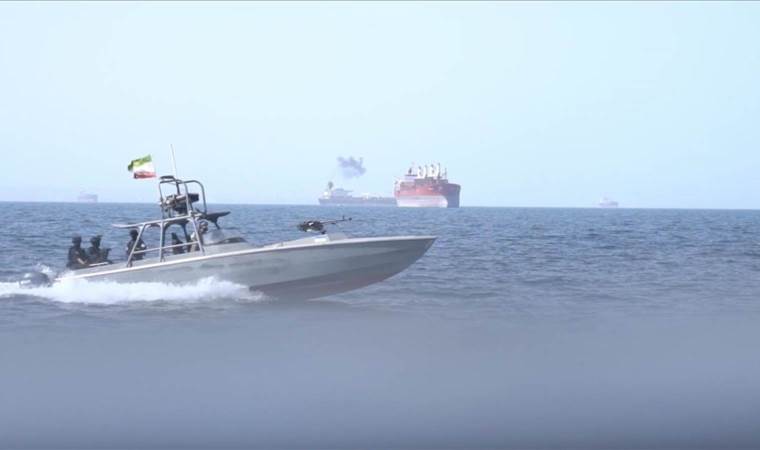

“We are drafting a protocol for Iran and Oman to supervise transit in the Strait of Hormuz,” Kazem Gharibabadi, deputy foreign minister for legal and international affairs, said in statements carried by the state news agency IRNA.
He said ship movements are conducted and coordinated during peacetime by Iran and Oman, two coastal nations.
“These requirements do not mean restrictions, but rather aim to facilitate and ensure safe passage and provide better services to ships,” he added.
Shipping through the Strait of Hormuz, a key passage for oil and gas shipments, has sharply declined in the wake of the US-Israeli war on Iran, prompting countries to consider alternative maritime and land routes.
About 20 million barrels of oil pass through the strait daily, and its closure has caused to raise oil prices and shipping and insurance costs, triggering global economic concerns.
Gharibabadi insisted that the Strait of Hormuz “is open and transit is proceeding smoothly.”
“When we face aggression, movement encounters serious disruptions,” he said. “We are now in a state of war, and wartime conditions cannot be governed by peacetime rules.”
Gharibabadi said attacks on nuclear facilities under the safeguards of the International Atomic Energy Agency “violate international law, the UN Charter, and relevant resolutions.”
Such actions “endanger international peace and security” and require serious action by the UN Security Council, he added.
He said several Iranian nuclear sites had been targeted, including areas around the Bushehr nuclear power plant, facilities in Ardakan, Khondab, Natanz and Fordo.
“All these actions are in violation of international law.”
Gharibabadi warned that if Iranian facilities are attacked from the territory of other countries, “similar facilities in those countries will also be subject to a proportionate response,” describing this as “a legitimate right of self-defense under the UN Charter and international law.”
On the Nuclear Non-Proliferation Treaty (NPT), he said Iran has remained committed to the treaty, but acknowledged growing domestic criticism.
“There are increasing voices questioning why Iran continues to adhere to its commitments,” including proposals in parliament to withdraw.
Regional tensions have escalated since the US and Israel launched a joint offensive on Iran on Feb. 28, killing more than 1,340 people to date, including then-Supreme Leader Ali Khamenei.
Tehran has retaliated with drone and missile strikes targeting Israel, as well as Jordan, Iraq, and Gulf countries hosting US military assets.
