Far-right ideology increasingly visible in Germany’s daily life, expert warns
Far-right extremist ideas and structures are being felt more strongly than ever in daily life across Germany, an expert warned.
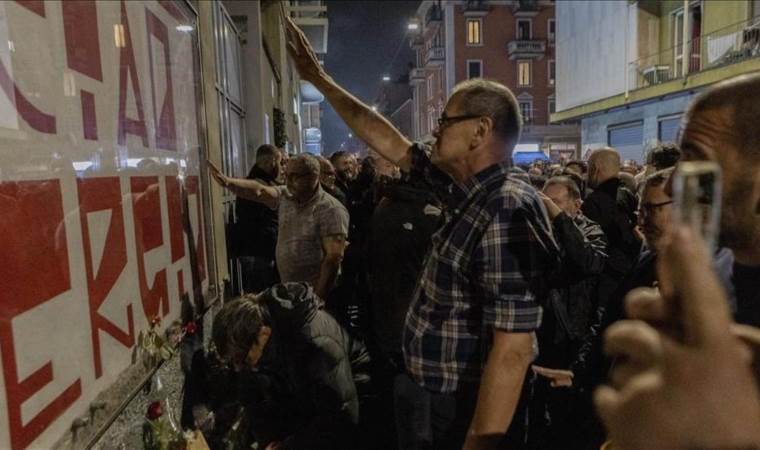

Speaking to Anadolu, Romy Arnold, the project manager at MOBIT, a Thuringia-based organization combating right-wing extremism, shared her assessment of how the far right is manifesting itself in everyday life in Germany.
She said far-right ideologies and structures are becoming increasingly noticeable, particularly in structurally weak regions, and are expanding their influence among young people.
According to Arnold, dehumanizing and neo-Nazi attitudes are now more openly visible on the streets, in parliaments, and at the local level.
“We see that far-right patterns of thought are becoming more widespread,” she said.
Arnold noted that the rise in far-right attacks also confirms this broader picture. She added that the far-right Alternative for Germany (AfD) party’s growing vote share in every election is no longer limited to eastern Germany but has become a nationwide phenomenon.
Pointing out that neo-Nazi parties continue to achieve high vote shares in local elections in some regions, Arnold said right-wing combat sports networks, youth groups, and loosely organized far-right networks are also on the rise.
“The far right tries to infiltrate every space where people are present. This is particularly evident in structurally weak regions,” she said.
Arnold also addressed the causes of growing anger among young people, citing weak industrial structures, the withdrawal of the state from rural areas, problems within the education system, and the lack of sufficient recognition for the sacrifices demanded of young people during the COVID-19 pandemic as factors fueling this frustration.
‘Democratic parties ignoring young people’
Arnold stressed that the far right exploits this anger “very strongly and very effectively,” while also offering its own sense of identity. At the same time, she criticized mainstream politics.
“Unfortunately, democratic parties are also ignoring young people. This is not only the case on social media. In the most recent state elections in Thuringia, there was only one party that directly addressed young people with its own campaign and election posters. And that was the AfD. In other words, they are reaching out to young people, meeting them where they are.”
She warned that in some areas, taking a stand against the far right has become extremely difficult.
“In local elections held in some municipalities in the east, the AfD’s vote share has in some cases reached 50%. And we haven’t even begun to talk about the Reichsbürger structures that still exist there, or the general challenges faced by rural areas. These are the realities we are dealing with. Encouraging people to stand up for democratic values, there can sometimes become a matter of personal safety,” Arnold said.
While emphasizing that she can understand the anger felt by young people, Arnold made clear that she cannot accept this anger being directed at innocent people. She said the far right deliberately shifts blame onto others and pits lower segments of society against one another.
Turning to the responsibility of politics, Arnold underlined the need for stronger support for individuals and organizations fighting for democracy.
“The issue is about taking people’s needs seriously and making good policy. All democratic parties repeat this, but they must actually put it into practice and not make it even harder for those who are already in very difficult situations to defend democracy at the local level,” she said.
‘Social media networks a driving force for far right’
Arnold also pointed to the significant role social media plays in the organization of the far right, saying platforms such as WhatsApp, TikTok, and Instagram “accelerate radicalization.”
“All existing social networks are a major driving force (for the far right) because they deliver messages to young people much faster than in the past,” she said.
“Previously, you had to do much more labor-intensive things, like going to schools to try to recruit young people or handing out CDs. There are huge opportunities here, and it’s not only the AfD – the entire far-right spectrum is exploiting these opportunities.”
Cautioning against outright bans on social media, Arnold warned that such measures could end up punishing the wrong people. She argued instead for alternative approaches that strengthen young people’s democratic participation and improve critical media literacy as more effective solutions.
Most Read News
-
 White House defends Trump’s media ban
-
Azerbaijani president pardons French national convicted
-
Indonesia records 175,000 respiratory infections as
-
Trump meets with Venezuela’s acting president in 1st
-
Netanyahu won’t meet Trump during ‘brief’ UN visit
-
Board of Peace to unveil $2.45B Gaza recovery plan
-
22-year-old worker dies after fall at Rome’s Colosseum
-
Netanyahu failing after Macron criticizes occupier