EU Commission chief calls for new European Security Council,' bloc-wide emergency security protocol
The European Commission president on Wednesday called for the establishment of a new "European Security Council" and an EU-wide emergency security protocol that would require all member states to convene when triggered by a security incident.
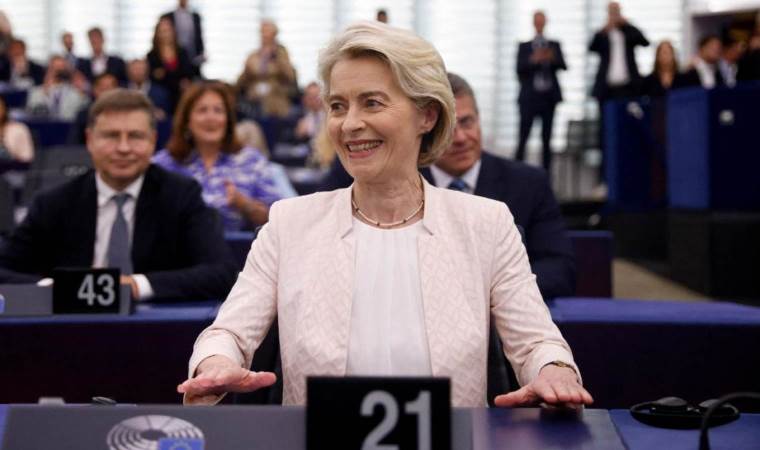

Addressing the European Parliament, Ursula von der Leyen said Europe's security institutions and decision-making mechanisms had not kept pace with a changing threat environment, as the war in Ukraine continues with a rise in alleged Russian hybrid threats against European countries.
Von der Leyen said the EU needs "its own counter-hybrid playbook" and called for agreement on how to respond to incidents that fall below the threshold of armed aggression but nevertheless pose a threat to national security.
"I believe it is time for Europe's own Article 4, an emergency security protocol," she said, referring to a clause of the NATO charter where members of the alliance convene to discuss when any of them feels under threat.
Under the proposed mechanism, when triggered by one member state, all EU countries would convene to coordinate a European response, deter further escalation, and mitigate the impact of the incident, according to von der Leyen.
She said the initiative would complement, rather than replace, existing cooperation with NATO, whose membership overlaps to a great extent with the EU’s.
Von der Leyen also announced plans to set out proposals to make a proposed European Security Council a reality, saying the initiative is increasingly urgent given the "nature and scale" of the risks facing the continent.
She said the proposed format would bring together EU leaders and partners including Canada, Ukraine, the UK, and Norway to focus on European security.
Gaza, West Bank
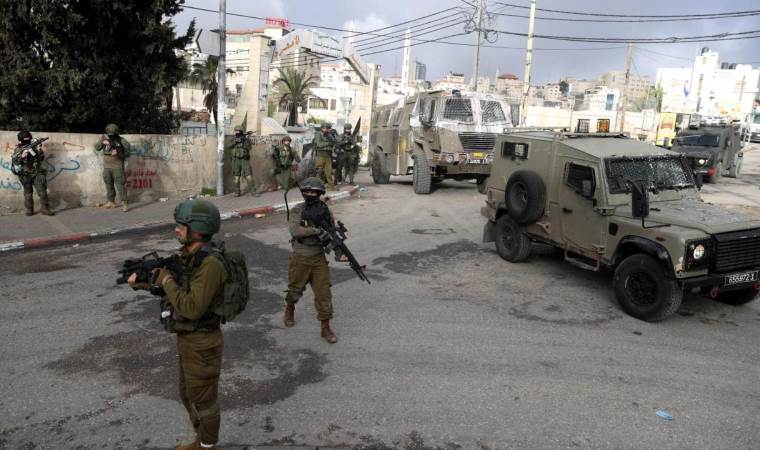
Turning to the Middle East, von der Leyen said the suffering in Gaza and violence in the West Bank had deeply affected Europeans.
"The Israeli government's decision to advance the illegal E1 settlement project is unacceptable," she said, referring to a planned illegal settlement in the West Bank.
Von der Leyen mentioned how she had previously called for Europe to take measures in response to developments in the region but said EU member states had been unable to build the necessary majorities for a unified response.
"When Europe is divided, it cannot change the course of events," she added.
At the same time, she said Europe supports Israel's right to "self-defense" and stressed that Palestinians have an equal right to live in safety and dignity.
"It is Europe's role to keep the flame of the two-state solution alive," she said.
Migration
Von der Leyen also addressed migration and Europe's external borders, referring to Spain’s North African enclave of Ceuta, where thousands of would-be immigrants crossed the border starting in late July, saying that although the events differed in nature, they shared common elements.
Von der Leyen accused traffickers and smugglers of exploiting vulnerable people and said European adversaries were also involved in exploiting such movements.
The EU Commission has proposed sanctions targeting traffickers and smugglers, she said.
Von der Leyen said Europe needs the means to protect its external borders, particularly when mass movements are "engineered and weaponized."
She announced plans for a new European emergency response instrument that would be activated only under a strictly defined set of criteria.
The instrument would allow, in such circumstances, for time-limited and strictly defined flexibility in standard procedures, she said.
Von der Leyen also stressed that respect for the EU's values is "non-negotiable," citing a recent incident in Serbia, which is seeking membership in the bloc.
"I was horrified by the pictures from (Bosnian Serb military commander Ratko) Mladic's funeral in Belgrade last week. He committed the most atrocious crimes against humanity," she said.
"Glorifying war criminals simply has no place in the European Union," she added.
Most Read News
-
 Zelenskyy accuses Russia of attempting to attack his
-
Iranian strikes caused widespread damage to US bases
-
Saudi air defenses intercept Houthi drone near Mecca
-
Messi to bid farewell to Argentina in Oct. 6 match
-
Israel closes Ibrahimi Mosque to Muslim worshipers in
-
EU Commission chief calls for new European Security
-
Iran says it shot down US MQ-9 drone over Qeshm Island
-
3 killed after helicopter crashes during live shot of