Costa Rica votes with security in mind as conservatives poised to hold power
On Sunday, the people of Costa Rica will head to the polls to decide who will become the next president and to elect new members of the lower house of congress, in what is shaping up to be a general election strongly favoring continuity of the current right-wing government and its conservative agenda.
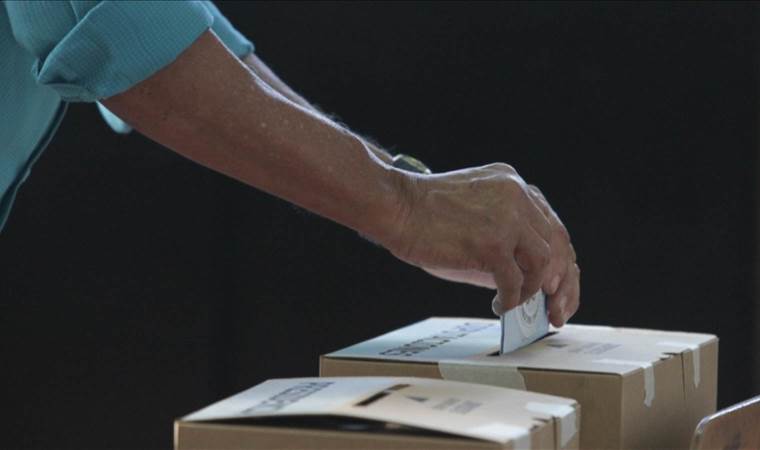

Despite dozens of parties competing for power, polls point to a landslide victory for the Sovereign People’s Party (Partido Pueblo Soberano), signaling the continuation of the conservative administration of President Rodrigo Chaves Robles and paving the way for the implementation of substantial reforms.
In total, voters will elect 60 positions: the president, two vice presidents and 57 members of the Legislative Assembly, who will serve four-year terms.
Polls open at 6 am local time, and for the next 12 hours, approximately 3.7 million eligible voters are expected to cast ballots, following four years of the Chaves Robles’ government and amid growing public concern about violence and the infiltration of organized crime.
Campaigns officially closed Jan. 30. Of the 20 presidential candidates, three are considered main contenders, with a realistic chance of competing for power in the first and potential second round of voting.
Leading the polls is the protegee of the current president, Laura Fernandez Delgado, from the ruling Sovereign People’s Party. Surveys such as the most recent conducted by the Center for Political Research and Studies (CIEP) place her support at 44%, surpassing the constitutional threshold of 40% required for an outright first-round victory.
Fernandez Delgado presents herself as a solid continuation of the outgoing administration of Chaves Robles, basing her platform on promises of economic growth and enhanced security.
Closely following Chaves Robles’ political line, Fernandez Delgado pledges to continue a government focused on expanding the economy through investment and implementing a security strategy strongly aligned with the United States.
Costa Rica has already reached agreements with Washington in this area and, following the US’ lead and that of regional counterparts, has designated major drug-trafficking criminal organizations as international terror groups.
During the Chaves Robles administration, Costa Rica recorded average economic growth of close to 5%, a reduction in unemployment to 6.9% and a significant fiscal consolidation.
Trailing Fernandez Delgado is Alvaro Roberto Ramos Chaves, an economist with a doctorate from the University of California, Berkeley, representing the traditional National Liberation Party (Partido Liberacion Nacional, PLN). According to the CIEP poll, Ramos Chaves holds 9.2% support. The PLN is one of the country’s largest political forces and represents Costa Rica’s social democratic base.
Positioned on the moderate left, Ramos Chaves seeks to strengthen the middle class and support families. His approach to public insecurity critiques the escalation of state violence under Chaves Robles and Fernandez Delgado, emphasizing the need to address the root causes of crime through investment in education.
In third place, with 8.6% support in the final CIEP survey, is Claudia Dobles Camargo of the Citizen Agenda Coalition (Coalición Agenda Ciudadana, CAC), who presents herself as a centrist profile in an increasingly polarized race. An architect and urban planner, Dobles Camargo has extensive experience in modernization and infrastructure projects, including Costa Rica’s public transportation system.
Her platform focuses on environmental justice, support for women and the protection of human rights.
The 2026 elections take place amid a growing wave of violence in what has traditionally been the safest country in the region and an international hub for tourism.
In recent years, Costa Rica has witnessed the emergence of domestic criminal organizations that have gained an increasing foothold in the hemispheric narcotics market.
The rise of groups such as the Southern Caribbean Cartel, the country’s first internationally operating criminal organization, has been accompanied by a sharp increase in violence. By 2025, Costa Rica had recorded 873 homicides, three fewer than in 2024.
According to the Judicial Investigation Agency (OIJ), 2026 began violently, with 51 homicides linked to drug-trafficking score-settling recorded in the early weeks of the year.
Chaves Robles has charted a conservative course for his administration, drawing comparisons to regimes such as that of Salvadoran President Nayib Bukele, whose public security model relies on strong presidential authority, prolonged states of emergency and the suspension of individual guarantees.
The current security policy, which would continue under a Fernández Delgado administration, is heavily anchored in US guidelines and the administration of President Donald Trump, from whom Costa Rica has received $19.5 million in security assistance.
In the final months of his term, the Chaves Robles administration has redirected funds toward the construction of a High-Security Center for Organized Crime (CACCO), a mega-prison with a capacity of 5,000 criminal leaders, alongside the deployment of military forces across the country aimed at combating the emerging criminal regime.
Most Read News
-
 White House defends Trump’s media ban
-
Azerbaijani president pardons French national convicted
-
Indonesia records 175,000 respiratory infections as
-
Trump meets with Venezuela’s acting president in 1st
-
Netanyahu won’t meet Trump during ‘brief’ UN visit
-
Board of Peace to unveil $2.45B Gaza recovery plan
-
22-year-old worker dies after fall at Rome’s Colosseum
-
Netanyahu failing after Macron criticizes occupier