Fidan and Lavrov met in New York
On Monday, ahead of a crucial United Nations Security Council meeting on the Middle East, Turkish Foreign Minister Hakan Fidan met with his Russian counterpart, Sergey Lavrov, in New York.
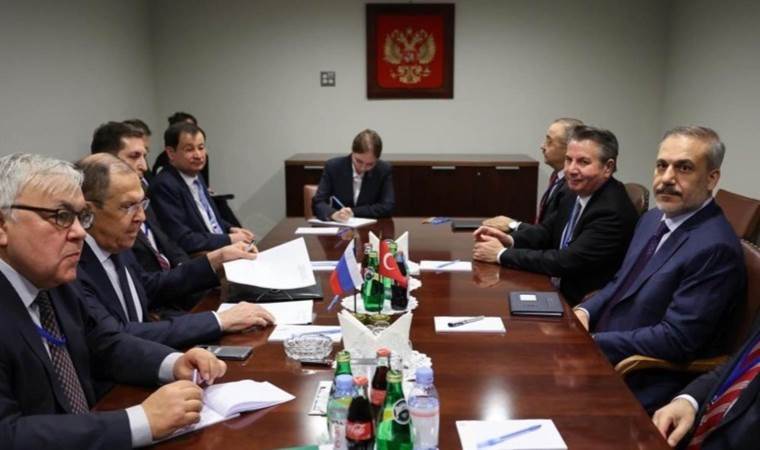

Conducted behind closed doors, this high-level dialogue occurred just a day before the Security Council planned to tackle pressing Middle Eastern issues, including the situation in Gaza.
Turkish sources have been tight-lipped about the discussions, but the Russian Foreign Ministry disclosed on Tuesday that the talks centered on key regional challenges. These challenges included the tense situation in the Gaza Strip, the conflicts in Syria, and the strained conditions in the Red Sea area. Discussions also extended to the broader Middle East, the Black Sea zone, and the Caucasus region. Furthermore, the ministers explored energy issues and the future schedule of bilateral contacts.
Amid escalating conflict in the Middle East, this diplomatic meeting is significant. Israel has been engaged in intensive military operations in the Gaza Strip since a cross-border attack by Hamas on October 7. These operations have led to substantial casualties and displacement. According to the UN, 85% of Gaza's population is now internally displaced, with 60% of the infrastructure severely damaged or destroyed. This has resulted in critical shortages of food, clean water, and medicine. The Palestinian militant group has reported over 25,000 deaths in Gaza, while close to 1,200 Israelis are believed to have been killed in the conflict.
The upcoming UN Security Council meeting aims to address these issues, with a focus on establishing an immediate ceasefire in Gaza, increasing humanitarian aid, releasing hostages held by Hamas, and exploring avenues for a two-state solution to achieve lasting peace in the region.
This meeting highlights the influential roles of Turkey and Russia in regional geopolitics and their ongoing efforts to manage complex international relations and crises. The meeting between the Turkish and Russian foreign ministers not only reflects their shared interests but also demonstrates their significant influence in guiding efforts towards regional stability and peace.
Most Read News
-
 Hungary’s former foreign minister denies allegations
-
FBI chief Kash Patel announces engagement to country
-
Iran executes 2 protesters over alleged role in killing
-
Personal data of 8.8M people accessed in Denmark
-
Student protests continue across France as up to 500
-
Yemeni government forces claim control of Bab el-Mandeb
-
Netanyahu threatens more assassinations in Gaza as
-
German spy chief warns of violent conflict risk with