Oil up over fears of widening conflict in oil-rich Middle East
Gains are weak as outlook for crude demand in China, world's largest crude oil importer, remain bleak
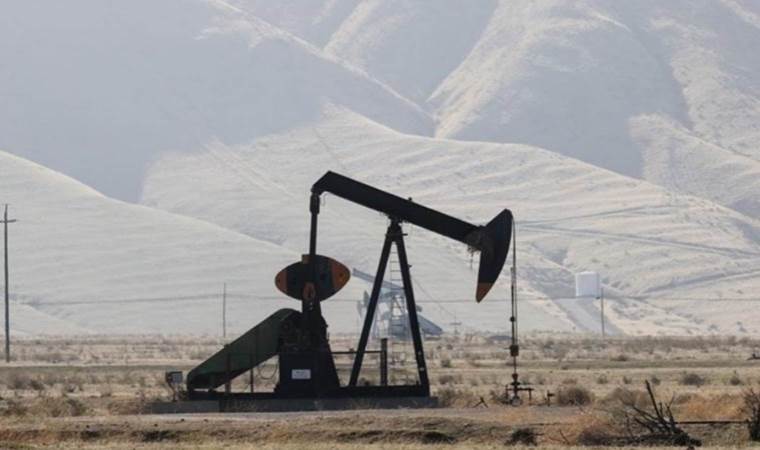

Oil prices increased on Monday over fears of a widening conflict in the oil-rich Middle East.
International benchmark Brent crude traded at $80.67 per barrel at 09.51 a.m. local time (0651 GMT), an increase of 0.49% from the closing price of $80.28 per barrel in the previous trading session.
The American benchmark West Texas Intermediate (WTI) traded at $77.50 per barrel at the same time, a 0.44% rise from the previous session that closed at $77.16 per barrel.
Both benchmarks started the week with upward movements following an attack in the Israeli-occupied Golan Heights.
Despite cease-fire negotiations, escalating geopolitical tensions in the Middle East, home to a vast majority of global oil reserves, increases supply risk in the markets.
On Saturday, a missile attack was carried out on a football field in the town of Majdal Shams in the occupied Golan Heights, killing 12 people.
Israel blames Hezbollah for the attack, but the Lebanese group denied playing any role.
Fear over a full-blown war between Israel and Hezbollah has grown amid an exchange of cross-border attacks between the two sides.
The escalation comes against the backdrop of a deadly Israeli onslaught on Gaza which resulted in the death of more than 39,300 people since last October.
Meanwhile, negotiations regarding the cease-fire in Gaza and the exchange of prisoners between Hamas and Israel are currently stalled after the postponement of the Israeli delegation's visit to next week, which was initially scheduled for Thursday.
However, gains were weak as the outlook for crude demand in the world's largest crude oil importer remained bleak.
Prices continue to be depressed by concerns about demand in China as it grapples with a slowing economic recovery.
This week, market players will be watching the US Federal Reserve's (Fed) meetings in a bid to gauge the oil market trajectory.
Fed will review its policy on July 30-31. While investors expect the bank to keep rates unchanged, they will also look for further evidence that a rate cut will happen at the September meeting.
Experts believe that reducing policy interest rates soon would support economic activity in the country, resulting in higher oil demand.
Most Read News
-
 3 killed, 36 injured in attacks on Saudi Arabia's Abha
-
US plans going to Moon 'to stay': Jeff Bezos
-
Drone strike causes fire at Yandex data centre in
-
Israeli forces advance into village in Syria’s Quneitra
-
Rubio says Iranian threats not constraining US
-
Ex-CIA official pleads guilty to nearly $200 million
-
French students renew school blockades as education
-
Ukraine says 30 killed in Russian attack in Kramatorsk